Florida summers arrive fast and stay long. For older adults living at home across South Florida and the Treasure Coast, the heat is a genuine health concern, not just a matter of comfort. Heat safety for seniors in Florida deserves real attention because aging changes how the body regulates temperature. Sweat glands become less efficient, thirst signals weaken, and certain common medications can reduce the body’s ability to cool itself. The result is that a hot afternoon that a younger person shrugs off can push an older adult toward heat exhaustion or heat stroke.
Why Older Adults Face Greater Risk
Several factors combine to make seniors more vulnerable during hot weather. Reduced kidney function means dehydration sets in faster. Cardiovascular conditions common among older adults can limit blood flow to the skin, which is the body’s primary cooling mechanism. Diuretics, antihistamines, and certain blood pressure medications all affect how the body handles heat. Recognizing these underlying factors helps families plan ahead rather than react after the fact.
Practical Steps That Make a Difference
Keeping an Older loved one comfortable and well during peak summer months comes down to a handful of consistent habits. The following measures are worth building into a daily routine from June through September.
- Hydration on a schedule. Older adults often do not feel thirsty until dehydration is already underway. Encourage water intake at regular intervals throughout the day, not just at mealtimes. Water-rich foods like cucumbers, watermelon, and citrus fruits also contribute to fluid intake.
- Limit outdoor time during peak heat hours. Between roughly 10:00 a.m. and 4:00 p.m., outdoor temperatures and sun intensity peak. Errands, walks, and gardening are better handled in the early morning or after 5:00 p.m.
- Keep indoor spaces consistently cool. A consistently cool indoor environment is especially important during a Florida summer. If a central unit is unreliable, a window unit in the bedroom provides a critical cool space. Check that ceiling fans are set to spin counterclockwise in summer to push cooler air downward.
- Dress for the conditions. Lightweight, loose, and light-colored clothing reduce heat absorption. Cotton and linen breathe far better than synthetic fabrics.
- Check in regularly. Isolation is a risk factor. A daily phone call or in-person visit gives someone the chance to notice early warning signs of heat-related illness, including confusion, flushed skin, or unusual fatigue.
Warning Signs To Act On Immediately
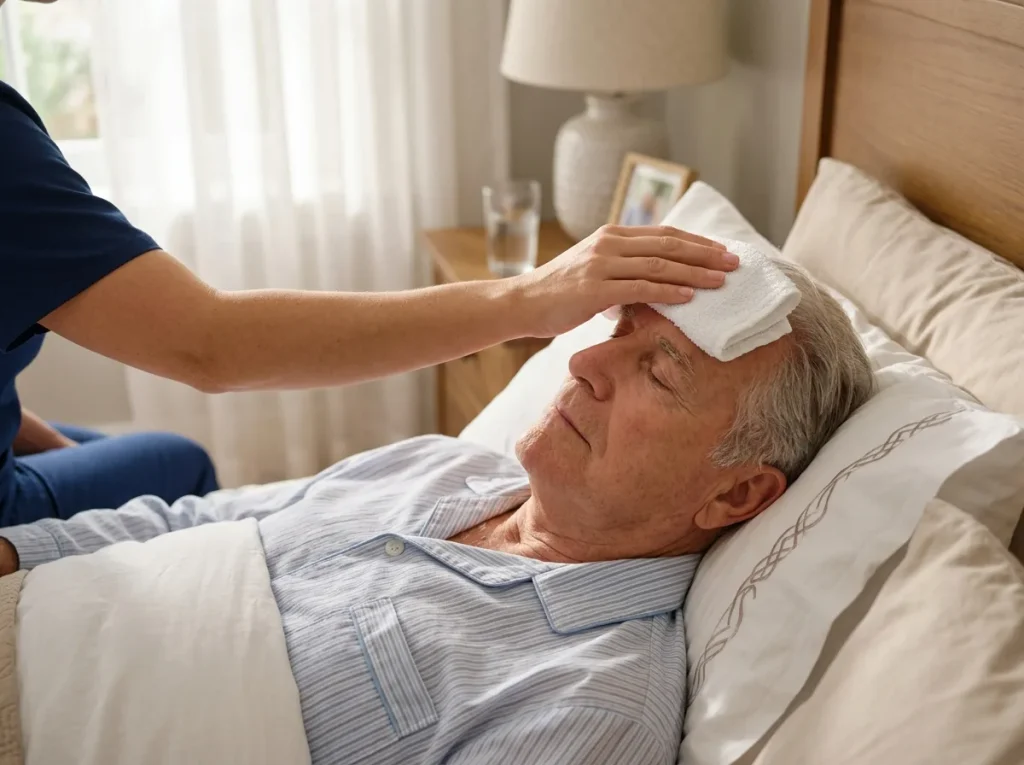
Heat stroke is a medical emergency. Warning signs may include confusion, loss of consciousness, a fast and strong pulse, and hot, red skin that may be dry or damp. Call 911 immediately, begin cooling the person, and do not give them anything to drink.
How In-Home Support Helps During Summer
For older adults who live alone, summer heat can make hydration, meals, errands, and other daily routines harder to manage. A caregiver referred through Living Life at Home can assist with activities of daily living and provide regular check-ins that help families notice changes in energy, hydration, or behavior.
Families considering additional assistance can review the signs that a parent may need in-home care to better understand when support may be useful.
Find In-Home Support for Florida’s Hottest Months
Living Life at Home refers qualified healthcare providers throughout South Florida and the Treasure Coast, helping older adults receive assistance at home while maintaining familiar routines.
Contact Living Life at Home online to discuss care options for you or your loved one or explore the service areas across South Florida to find coverage near you.